
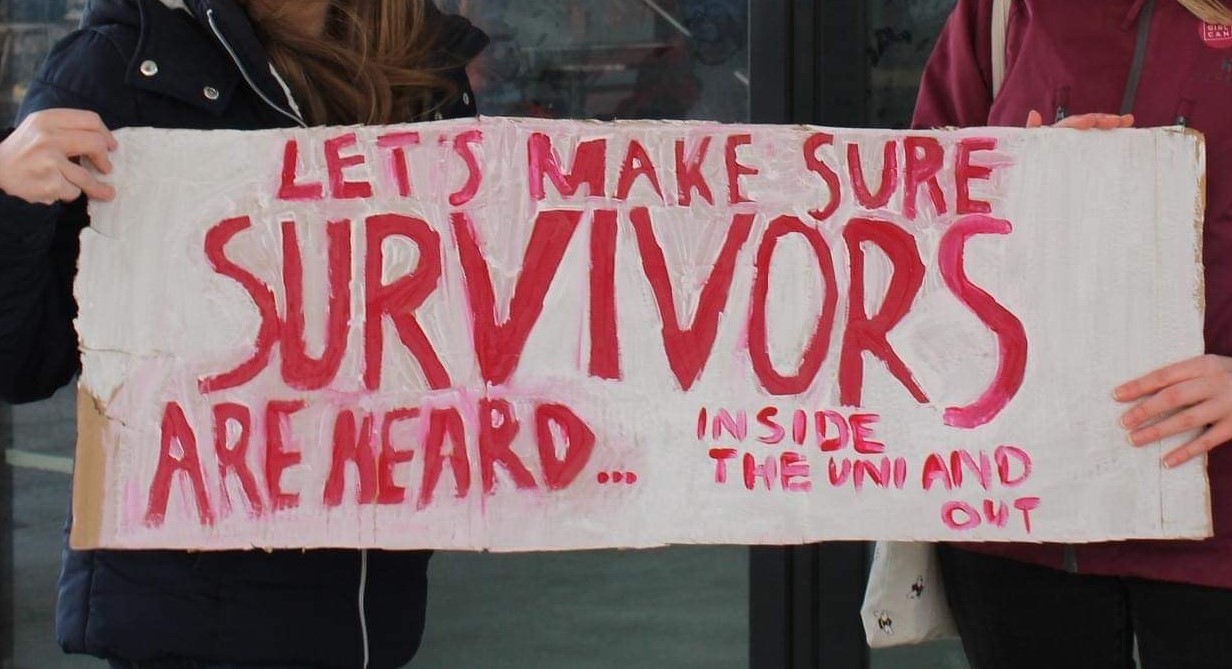
Written by Urvashi Verma and translated by Iwan Thomas.
Scroll for Welsh.
While growing up, I was always termed as ‘’the feminist’’ by those who were around me. As a teenager, I never really knew what it meant. For sure, I was and still am an avid supporter of equal rights for women (in all spheres of life). But that was a natural thought process for me, and I felt that’s how things should be. While pursuing postgraduate study in Aberystwyth University, I came across a post for society elections. I browsed through the societies and decided I would want to stand as a committee member of the Feminist Society. This society is something that I believe and would like to meet others with the same belief system. I felt it was an opportunity for me to put in some positive contributions.
Aberystwyth University Feminist society logo
The society regularly conducts sober socials and is a great chance to meet and share experiences. There are some solidarity group events to show support to victims. It works with Tickled pink to raise awareness for breast cancer prevention. It is open to anyone who believes in feminism irrespective of their gender and sexual orientation.
So, what is feminism?
In layman’s term, it means equal treatment of people regardless of their gender identities. Though this term gained popularity in the 1900s, it has been around for much longer. According to Wikipedia, this term was coined by a French philosopher in 1830s. Decades later, it was incorporated in the Oxford English Dictionary. Depending on the time and cultures, it gave different goals to feminists from different regions around the world. Despite of having different or separate goals, all these movements must be considered as part of the overall idea of feminism.
Feminism in modern times:
Though it is argued that in current times, there is no need of feminism, I disagree. I understand that this movement has taken successful strides and due to that, there is a lot of improvement in the socio-economic condition of women across the globe. But there is still lots to be done. In most work environments, women are still paid less than their male counterparts, they face sexual harassment/violence and are underrepresented in many media and government outlets. There is a lot of stigmas around the sexual health of women which prevents them to get proper medication. I believe that unless these issues are resolved, we will not achieve true equality.
Courtesy of the internet, there is a wave of awareness around women’s issues. This has helped in formulating better laws in some countries. Like Scotland has made period products free, paid maternity leave has increased in most countries, etc.
However, I personally believe that there is less awareness regarding the sexual crimes against women. Even today, many victims are shamed and blamed which prevents them from getting any medico-legal help.
Aberystwyth University initiatives:
The university has put in many support groups for women facing mental or physical violence (both students and staff), there are free period products in the washrooms, there is also a regular meet and greet for women in the Computer Science department. Along with that, there is a departmental Athena Swan Committee which promotes equal gender pay in workplaces – students can also be members.
To conclude, I feel I am grateful to have been part of Aberystwyth University and its Feminist Society as it has given validation to all the beliefs that I grew up with and is letting me make constructive efforts to make it safer for women.
Thanks!
Ffeministiaeth ym Mhrifysgol Aberystwyth
Wrth dyfu i fyny, roeddwn i bob amser yn cael fy ngalw yn ‘ffeministaidd’ gan y rhai o fy nghwmpas. Yn fy arddegau, doeddwn i byth yn gwybod beth oedd yn ei olygu. Yn sicr, roeddwn ac yn dal i fod yn gefnogwr brwd o hawliau cyfartal i fenywod (ym mhob maes bywyd). Ond roedd honno’n broses feddwl naturiol i mi, ac roeddwn i’n teimlo mai dyna fel y dylai pethau fod. Wrth ddilyn astudiaeth ôl-raddedig ym Mhrifysgol Aberystwyth, deithais ar draws swydd ar gyfer etholiadau cymdeithas. Porais drwy'r cymdeithasau a phenderfynais y byddwn am sefyll fel aelod o bwyllgor y Gymdeithas Ffeministaidd. Mae'r gymdeithas hon yn cynrychioli rhywbeth rwy’n ei gredu ynddo a hoffwn gwrdd ag eraill sydd â'r un system gred. Teimlais ei fod yn gyfle i mi wneud rhai cyfraniadau cadarnhaol.
Mae’r gymdeithas yn cynnal nosweithiau cymdeithasol sobr yn rheolaidd ac mae’n gyfle gwych i gyfarfod a rhannu profiadau. Cynnalir rhai digwyddiadau grŵp undod i ddangos cefnogaeth i ddioddefwyr. Maent yn gweithio gyda Tickled Pink i godi ymwybyddiaeth o ganser y fron. Mae'n agored i unrhyw un sy'n credu mewn ffeministiaeth waeth beth fo'u rhyw a'u rhywioldeb.
Felly, beth yw ffeministiaeth?
Yn nhermau syml, mae’n golygu triniaeth gyfartal o bobl ta waeth beth fo’u hunaniaeth rhywiol. Er daeth y term yn boblogaidd yn y 1900au, mae wedi bod o gwmpas ers llawer hirach. Yn ôl Wikipedia, bathwyd y term hwn gan athronydd o Ffrainc yn y 1830au. Degawdau yn ddiweddarach, cafodd ei ymgorffori yng Ngeiriadur Saesneg Rhydychen. Yn ddibynnol ar yr amser a'r diwylliannau, cynrychiolodd y term nodau gwahanol i ffeminyddion o wahanol ranbarthau ledled y byd. Er gwaethaf cael nodau gwahanol, rhaid ystyried yr holl symudiadau hyn fel rhan o'r syniad cyffredinol o ffeministiaeth.
Ffeministiaeth Modern:
Er dadleuir rhai nad oes angen ffeministiaeth yn y cyfnod presennol, rwy’n anghytuno. Deallaf fod y symudiad hwn wedi cymryd camau llwyddiannus ac oherwydd hynny, mae llawer o welliant yng nghyflwr economaidd-gymdeithasol menywod ledled y byd. Ond mae llawer i'w wneud eto. Yn y rhan fwyaf o amgylcheddau gwaith, mae menywod yn dal i gael llai o gyflog na’u cymheiriaid gwrywaidd, maent yn wynebu aflonyddu rhywiol/trais ac yn cael eu tangynrychioli mewn llawer o gyfryngau a’r llywodraeth. Parhawyd lawer o stigmas ynghylch iechyd rhywiol menywod sy'n eu hatal rhag cael meddyginiaeth iawn. Credaf heb cywiro’r materion hyn, ni fyddwn yn cyflawni gwir gydraddoldeb. Diolch i’r rhyngrwyd, mae ton o ymwybyddiaeth o faterion menywod. Mae hyn wedi helpu i lunio deddfau gwell mewn rhai gwledydd fel yr Alban wedi gwneud cynhyrchion mislif yn rhad ac am ddim, absenoldeb mamolaeth â thâl wedi cynyddu yn y rhan fwyaf o wledydd, ac ati.
Fodd bynnag, yn bersonol credaf bod llai o ymwybyddiaeth ynghylch y troseddau rhywiol yn erbyn menywod. Hyd yn oed heddiw, mae llawer o ddioddefwyr yn cael eu cywilyddio a’u beio sy’n eu hatal rhag cael unrhyw gymorth meddygol-gyfreithiol.
Mentrau Prifysgol Aberystwyth:
Mae’r prifysgol wedi creu sawl grwp cymorth ar gyfer menywod sy’n gwynebu trais meddyliol neu ffisegol (yn agored i fyfyrwyr neu staff), mae yna cynnyrch mislif am ddim yn yr ystafelloedd ymolchi, ac mae yna hefyd cyfarfodydd agored yn yr adran Gwyddoniaeth Cyfrifiadurol. Yn ogystal, mae yna pwyllgor Athena Swan adrannol sy’n hybu tal gyfartal yn y gweithle – gall myfyrwyr hefyd ymaelodi.
I gloi, teimlaf yn ddiolchgar o fod wedi bod yn rhan o Brifysgol Aberystwyth a’i Chymdeithas Ffeministaidd gan ei bod wedi dilysu’r holl gredoau y cefais fy magu gyda nhw ac yn fy ngallluogi i wneud ymdrechion adeiladol i’w wneud yn fwy diogel i fenywod.
Diolch!